Your PoC works. Will your product?
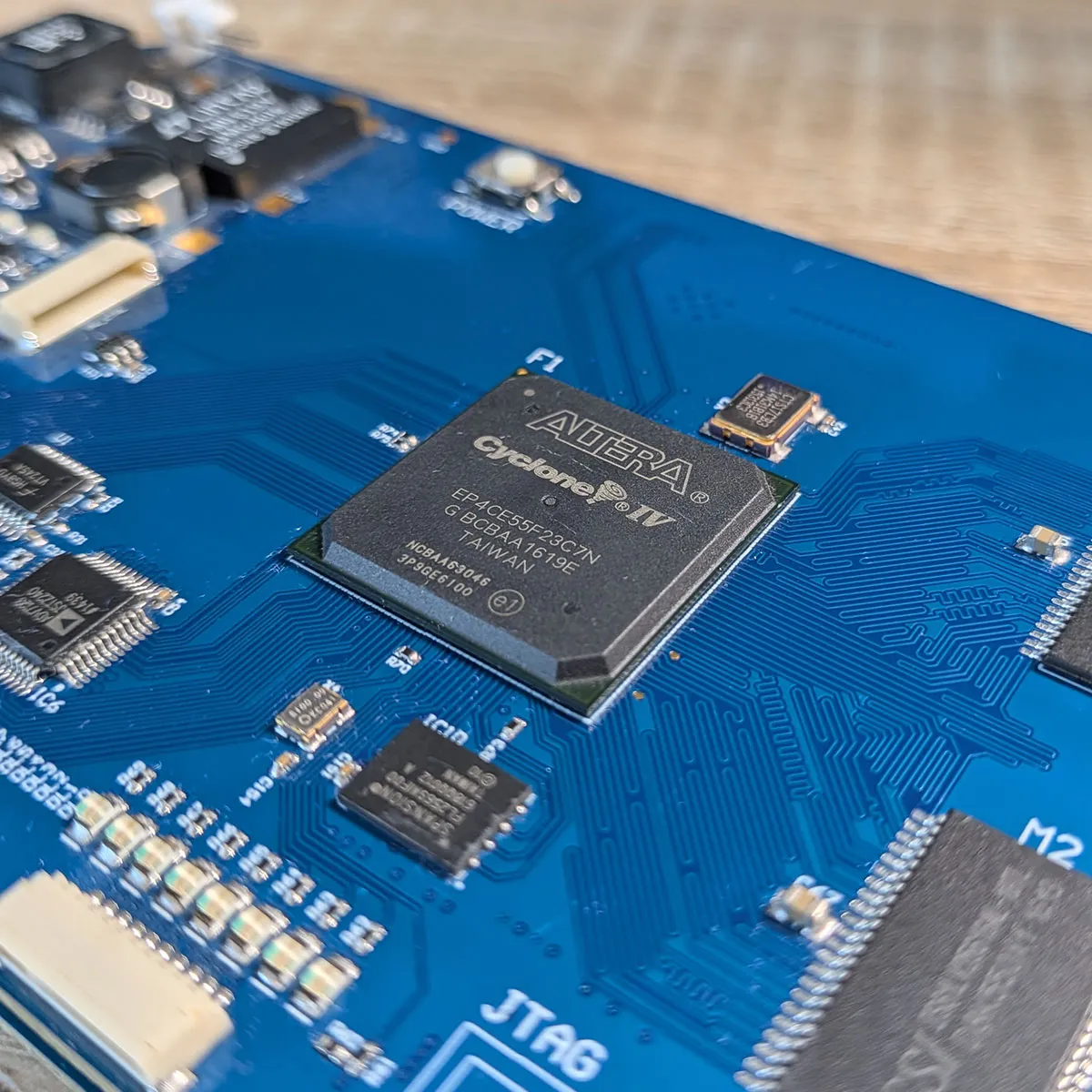
Hardware design, design review and embedded firmware for teams building electronic products. Whether you are growing a proof of concept, heading to production, or chasing a board that won’t behave, I can review what you have, design what you need, or help your team get there themselves — fast where speed matters, careful where mistakes get expensive. Over 15 years of designs in production, from medical imaging to connected consumer and industrial products.
Services
Product Development Journey
Discovery
Can it be built, and at what cost?
Yours to define. I flag technical consequences early.
Clear, prioritised requirements you can commit to.
Realistic technical options and their trade-offs.
BOM estimate, power budget, size, certification.
Fast, focused tests of the riskiest assumptions.
Development
Build it correctly
Design
Processor, power and interfaces chosen for cost and fit.
Robust, testable circuits with parts you can source.
High-density, mixed-signal and RF-aware boards.
Zephyr on Nordic and NXP, BLE, low power.
Independent review before you pay for fabrication.
I work closely with your ID, mechanical and software teams.
Verify
Getting first boards working, with root causes found.
Test plans and measurements against the requirements.
EMC and radio issues fixed before lab time.
Fixing the underlying design, not adding workarounds.
Validation
Did we build the right thing?
Pilot units built, deployed and monitored in the field.
Your users, your call. I make sure the data answers your questions.
Hardware and firmware changes driven by pilot findings.
Formal EMC, radio and safety testing with accredited labs.
Production
Can we make it at volume?
Applying DFM changes (if any), production test strategy.
Test firmware and fixture specifications.
Separating design issues from process issues.
Your manufacturer builds, I support them to get started with your design.
Obsolescence redesigns, cost-downs, firmware updates.
Wherever your product is, start there.
Talk about your projectThe pattern underneath
The path to a product
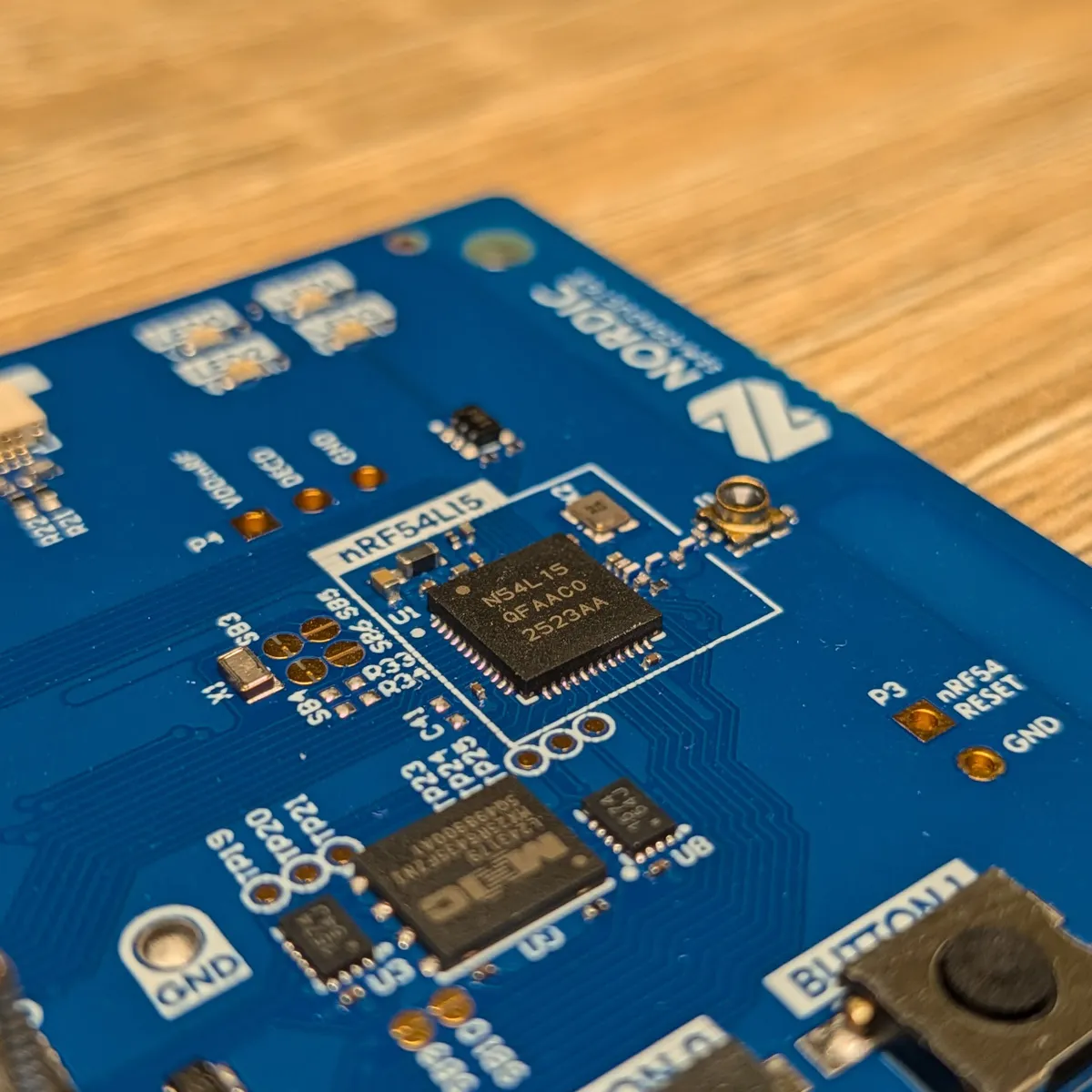
Time to market is essential, but so are reliability and long-term support, and optimising for the first can compromise the others. I’ve often seen proof-of-concept devices built on development kits grow into the final product, keeping the dev kit’s schematics, layout and firmware unchanged because they “already work”.
That’s a great way to prove an idea, but rarely a sound foundation for a product. Development kits and example code aren’t designed for the field or for a product’s constraints: passing compliance, securing data, updating firmware reliably, and the robustness expected of an embedded device. Nor are they designed with the supply chain and longevity a production product needs.
How far to depart from a reference design should be an early, deliberate decision. Too often it’s made reluctantly, once critical issues have already appeared.
System architecture
The decisions you pay for on every sprint that follows
Choosing a processor is not only a question of clock speed and peripheral lists. It is toolchain maturity, RTOS support, driver quality, documentation your team can actually read, vendor longevity, and the engineering hours you will spend working around whatever is missing.
I have watched a cheap, genuinely powerful part become the most expensive line on a project once development time was counted honestly. That cost never appears on the BOM.
I help define or review system architecture across hardware, firmware and user experience, against the constraints that actually bind: BOM cost, power budget, form factor, certification path, and engineering effort.
Background
Who you would be working with
Medical imaging hardware, end to end
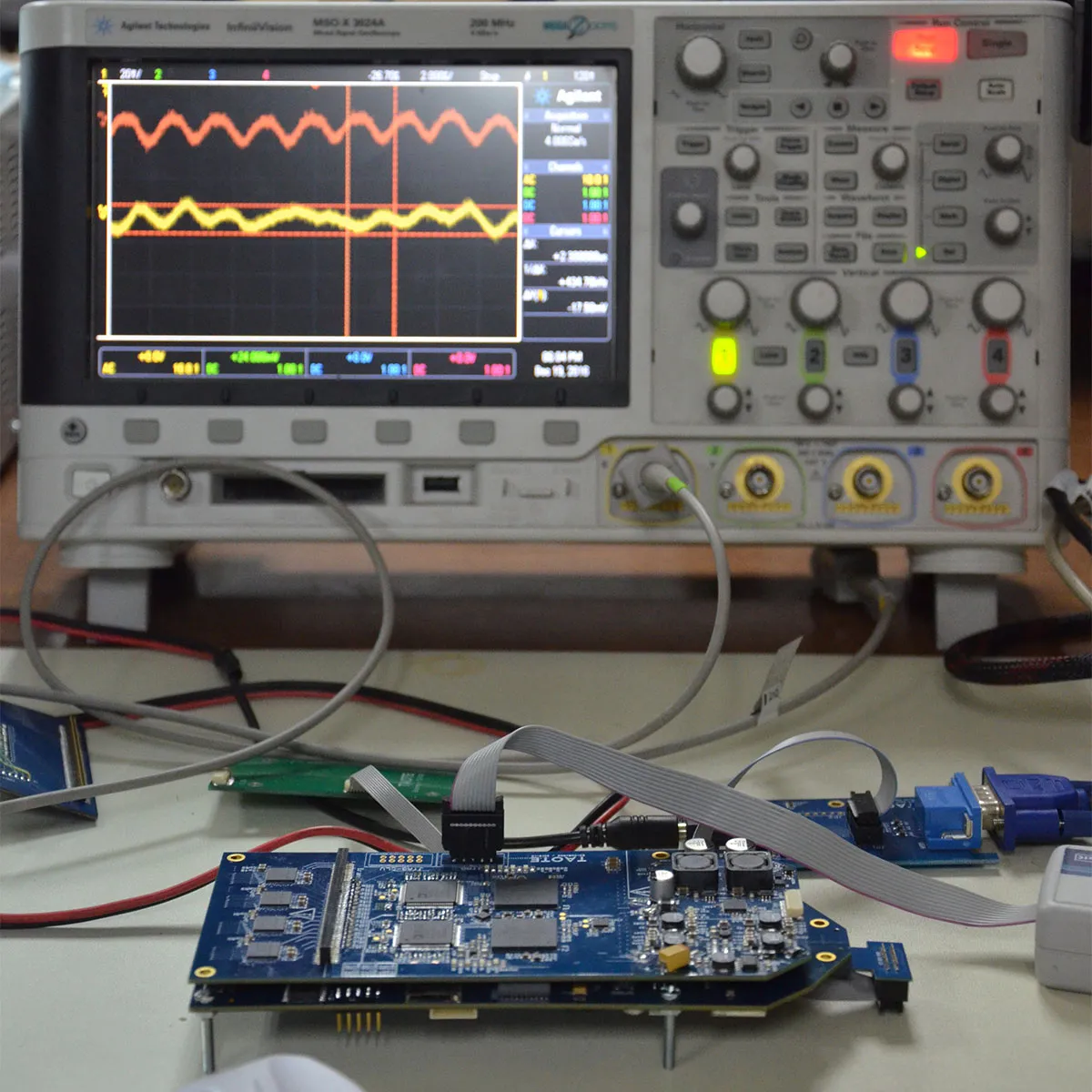
Led the electronics design of a portable ultrasound system: every PCB, including three FPGAs and the high-speed interfaces between them, plus collaborating with Verilog and firmware works. Patent US10548565B2.
Recognised engineering work
Ramón Salas Edwards award, Colegio de Ingenieros de Chile, 2016. Selected by CORFO for commercialisation training with SRI International.
Product development across industries
Nine years (2017-2026) at Tekt Industries, a Melbourne product design house, first as a hardware designer, later as a firmware developer and Team Lead. Products for clients in medical, agriculture, telecommunications, marine and connected consumer devices, covering every stage across projects, from concept and architecture to production. In a small team, that meant owning designs end to end and working directly with clients.
Passionate about sharing knowledge
Master of Engineering, University of Melbourne. Created and taught a PCB design course at Pontificia Universidad Católica; lectured computer architecture at Universidad de Chile; tutored digital systems design (FPGA and Verilog) at the University of Melbourne; and runs the RodriTech YouTube channel to share educational videos and his own projects.

How it works
Straightforward to start
Tell me about your project
A short email about what you’re building, or where you’re stuck. No charge, no obligation, and happy to sign an NDA before you send anything.
Let’s agree on a plan
A 30-minute call to understand your goals, constraints and timeline, still free. Then I’ll send a proposal with clear scope, deliverables and cost, and we refine it together until it fits.
Get to work
Regular progress updates, documented decisions, and deliverables your team can build on, whether it’s a design review, a fix, or a product taken from concept to production.
Working remotely
I work from Chile and keep an overlap with Australian business hours as most of my recent work has been delivered remotely to Australian teams.
Engagement models
- Fixed-scope design review
- Retained blocks of hours for ongoing support
- Defined design or firmware projects
Contact
Tell me what you're building
Whether it’s an idea on a napkin, a prototype that won’t behave or a board that needs to get through production, a short email is the quickest way to find out if I can help. I answer every enquiry myself, and I’m happy to sign an NDA first.
info@smartdreams.net